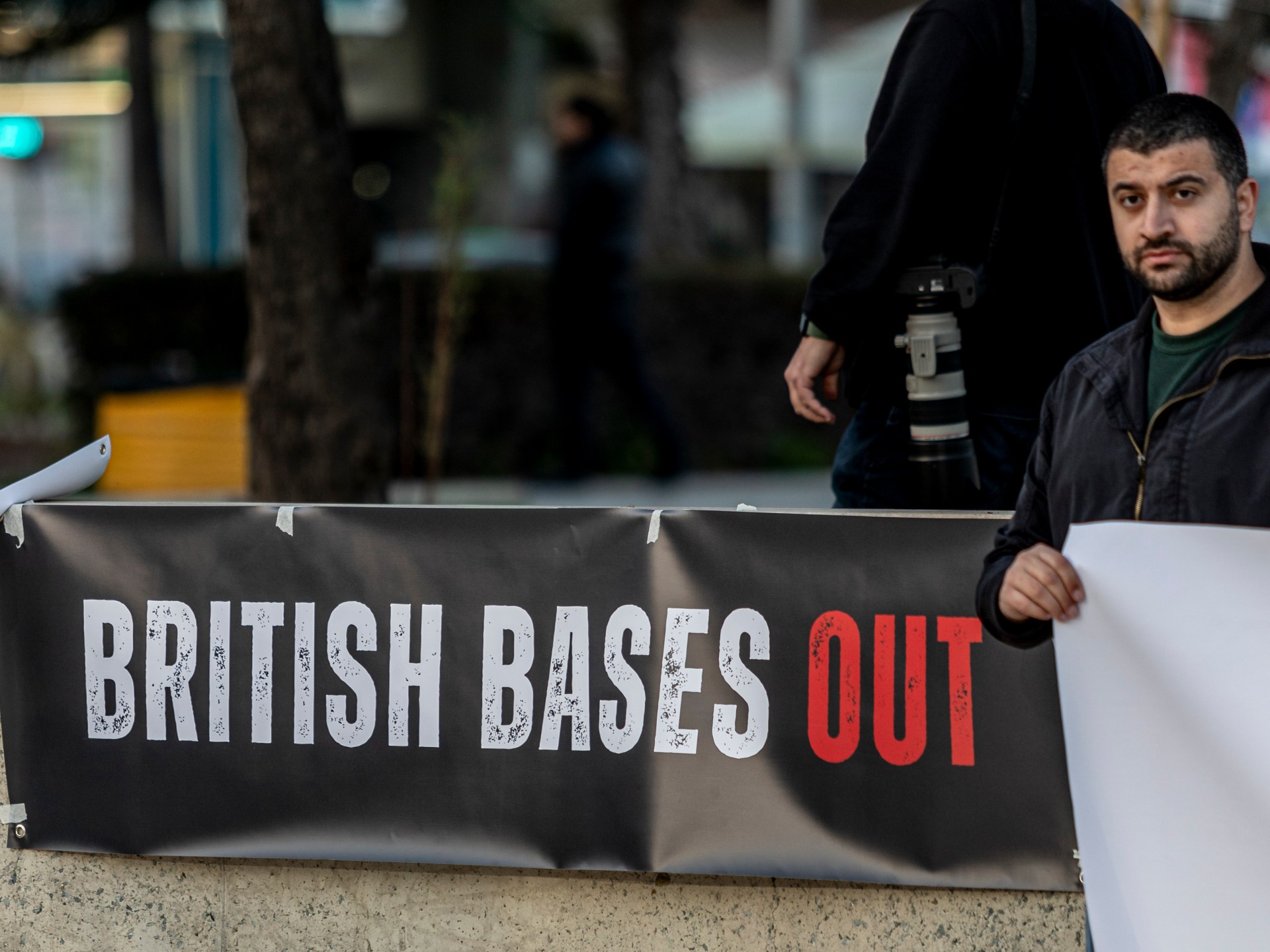
The eastern Mediterranean island of Cyprus, often envisioned as a tranquil tourist haven, has recently found itself erupting with protests and anger. At the heart of this unrest lies the contentious presence of UK military bases, now starkly illuminated by escalating tensions in the Middle East and the shadow of a potential wider "Iran War." As the world watches regional dynamics unfold, the role of these British enclaves in Cyprus has come under intense scrutiny, raising critical questions about sovereignty, colonial legacies, and the efficacy of the UK's Middle East Response: Did Allies Feel Let Down on Iran?
Cyprus: An Unwilling Frontline in a Volatile Region
In recent weeks, the streets of Limassol have resonated with fervent chants of "British bases out!" These demonstrations are not merely a local grievance; they are a direct reaction to Cyprus being drawn into the perilous orbit of Middle Eastern conflicts. The catalyst for this latest wave of anger was a suspected Iranian-made drone strike on RAF Akrotiri, a major UK sovereign base, occurring just two days after US-Israeli attacks on Iran had commenced.
The situation escalated further when reports confirmed that British Prime Minister Keir Starmer had granted permission for the United States to utilize these very bases for "defensive strikes" on Iranian missile sites. For many Cypriots, this move wasn't a show of allied strength but a dangerous escalation, transforming their island into an active, potentially vulnerable, launchpad for military operations against a significant regional power.
The Spark: Drone Strikes and US Operations
The drone strike on RAF Akrotiri served as a stark, tangible reminder of the risks associated with hosting foreign military assets in a hyper-volatile region. While the immediate damage or casualties might have been minimal, the psychological impact was profound. It shattered any illusion of distance from the conflicts raging across the sea, placing Cypriot communities, many living in close proximity to the bases, directly in harm's way.
The decision to allow US forces to use these bases for offensive action against Iran further inflamed public opinion. Critics argue that such moves bypass Cypriot national sovereignty, leveraging historical agreements in a way that disproportionately exposes the island to retaliatory attacks. For an independent nation, the inability to control the strategic deployment of military force from its own soil is a deeply unsettling proposition.
A Colonial Echo: Sovereign Bases and Cypriot Sovereignty
The British military's footprint on Cyprus dates back to the island’s independence in 1960. Under a delicate power-sharing agreement between Greek and Turkish Cypriots, the UK retained two sovereign base areas: Akrotiri and Dhekelia. This arrangement, for many, was a compromise that left Cyprus only partially sovereign. As Melanie Steliou Nicolaou, a local actress and TV presenter, articulated, the bases are a "remnant of the colonial and imperialist empire of Britain," asserting that Cyprus was "never truly decolonised."
This sentiment underscores a deep-seated grievance. The bases are not part of any lease agreement that economically benefits the island; rather, they serve as strategic outposts for British geopolitical interests. They are, essentially, pieces of foreign territory on Cypriot land, operating under British law and jurisdiction. This historical context forms the bedrock of the current protests, connecting modern-day military operations to a legacy of perceived incomplete independence. For a deeper dive into this historical context, consider reading British Bases in Cyprus: Colonial Legacy in a Volatile Middle East.
More Than Military Posts: Intelligence, Surveillance, and Economic Disparity
Beyond their role as launchpads for conventional military operations, the UK bases in Cyprus serve a covert, yet equally controversial, function: intelligence gathering and surveillance. Nicolaou observes that while the UK frames the bases as being for protection, "they’re really here to spy on the Middle East; when planes take off, people know they’re going to a warzone or sharing intelligence for a mission."
The Covert Role: Surveillance and Intelligence Gathering
Evidence supporting this claim has emerged from various sources. Declassified UK, a news outlet specializing in British foreign policy, reported in October on more than 600 surveillance flights linked to Israel’s operations in Gaza during the initial two years of the conflict, all originating from Cyprus. These flights, critics argue, implicate the UK and Cyprus in supporting highly controversial military actions in the region. One particularly disturbing report by Declassified UK highlighted a US military contractor, hired by the UK, conducting surveillance over Nuseirat refugee camp in northern Gaza shortly before an Israeli bombing that killed over 30 Palestinians in December 2024.
For activists like Nico, a resident and member of the group Autonomy, Feminism, Ecology and Anti-Capitalism (AFOA), these bases are "unsinkable launchpads" that allow the UK to treat Cyprus as an aircraft carrier for its military ambitions. This capability, while strategically valuable for the UK and its allies, comes at a significant moral and safety cost for the local Cypriot population, who are unwilling participants in these high-stakes intelligence games.
No Economic Reciprocity: A Lingering Grievance
Adding insult to injury, the sovereign base areas contribute nothing to the Cypriot economy through lease agreements or significant direct financial benefits. This lack of economic reciprocity intensifies the perception that Cyprus is being used for foreign interests without adequate compensation or consideration for its own welfare. While the bases do provide some local employment, the broader economic impact pales in comparison to the perceived geopolitical risks and the lost opportunity for Cypriot control over valuable land. This imbalance fuels the sentiment that the arrangement is fundamentally unfair, a remnant of a power dynamic that has long outlived its ethical justification in the eyes of many Cypriots.
The Broader UK Middle East Response: Allied Trust and Regional Stability
The uproar in Cyprus is not an isolated incident; it intertwines with a broader debate about the effectiveness and perceived reliability of the uk middle east response to ongoing crises. While the UK's deputy prime minister has publicly denied claims that the nation has "let down allies in the Middle East" concerning the "Iran war" (referring to the ongoing tensions and potential for conflict), reports from other sources paint a different picture.
Conflicting Narratives: Has the UK Failed its Allies?
Contrary to official denials, some Middle Eastern allies have reportedly communicated to the UK that they feel "failed over Iran." This divergence highlights a critical trust deficit. Such sentiments could stem from a variety of factors: perceived insufficient diplomatic pressure on Iran, a lack of robust military deterrence, or a misalignment of strategic priorities. For regional partners facing direct threats, any perceived hesitancy or inconsistency in the UK's stance can erode confidence in its commitment as a reliable ally.
The UK’s challenge lies in balancing its historical ties and strategic interests with the complex, often conflicting, demands of various regional partners. Its uk middle east response must navigate not just military operations but also intricate diplomatic efforts, economic sanctions, and humanitarian considerations. When these elements are not perceived as cohesive or effective by allies, it can lead to frustration and a sense of abandonment.
Navigating the Geopolitical Tightrope: Risks and Reputational Costs
The situation in Cyprus clearly demonstrates the reputational costs and risks associated with maintaining a significant military presence in a highly volatile region. While the bases provide the UK with crucial strategic depth and intelligence capabilities, their use for operations perceived as colonial or provocative by the host nation can undermine long-term relationships and fuel anti-Western sentiment. For the UK, the balancing act involves:
- Strategic Imperatives: Acknowledging the need for forward operating bases for intelligence and rapid deployment in a region vital to global security.
- Sovereignty and Local Sentiment: Respecting the independence of host nations and addressing their legitimate concerns about security risks and colonial legacies.
- Allied Cohesion: Ensuring that the uk middle east response is seen as robust and reliable by its key partners, without alienating others or exacerbating regional tensions.
The anger simmering in Cyprus over UK military bases serves as a potent microcosm of the broader challenges facing the uk middle east response. As regional tensions escalate, particularly in the context of the "Iran war," the strategic utility of these bases must be weighed against their political and social costs. For Cyprus, the bases represent a lingering colonial wound and a present-day security risk. For the UK, they are a critical component of its global reach and intelligence network. Reconciling these divergent perspectives demands not just tactical adjustments but a fundamental re-evaluation of long-standing arrangements, ensuring that the pursuit of strategic interests does not come at the expense of national sovereignty, local safety, and enduring allied trust. The path forward requires sensitive diplomacy, transparent communication, and a genuine effort to address the deep-seated grievances that continue to erupt on the sun-drenched shores of Cyprus.